
Yesterday, I learned something during a Stewardship and Finance gathering in our Annual Conference connection that has stayed with me and I would love to share with you. We were reflecting on how, historically, different churches have often been associated with different social contexts.
For example, The Episcopal Church (United States), shaped by its historical roots in Anglicanism, has often been associated and has found a home among well-established and socially and financially prominent communities. Meanwhile, the Presbyterian Church (USA), with its strong systematic theology and educational emphasis, has long been connected to academic life and structured intellectual classes.
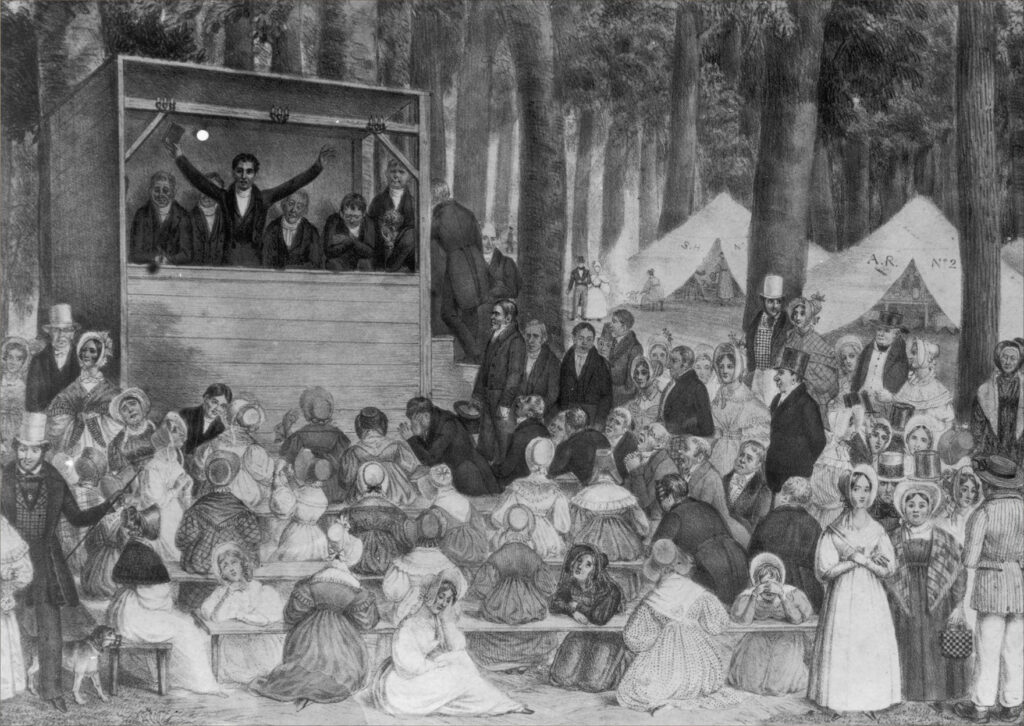
However, my attention was immediately caught when I heard that early Methodism, as historians like David Hempton1 and Richard Heitzenrater2 describe, took root especially among working-class people, laborers, peasants, and those living on the margins. John Wesley’s movement did not wait for people to come in, but went out to where life was actually happening and built community there.
As I kept thinking about that, it began to make sense why something like Wesley’s social holiness would be embraced so naturally within Methodism.
It is impossible that a faith that is born in shared struggle and close community remains individualistic; but instead, it becomes relational, practical, and deeply attentive to dignity and justice. In that sense, this concern for those on the margins is part of the very DNA of our theological task as Methodists.
Of course, these are broad tendencies, not rigid categories, but they offer us a helpful lens to understand how traditions have been lived out in different contexts.
And I refer to these traditions because the Wesleyan Quadrilateral reminds us that tradition, among other things,3 actively shapes how we read Scripture and how we live our faith today. If this attentiveness to community and to those on the margins is part of our own historical roots and our very nature, then it is also part of what is meant to flow through us now.
So, I wonder what it means for us to take that seriously in our own context. Who are we drawing close to, and who might still feel far away from our spaces? Are we forming community where people already are, or waiting for them to find their way to us? And how might our tradition be inviting us, even now, to become again a movement that embodies the grace we proclaim?
And please, don’t get me wrong. I am not saying that, as the Methodist church, we should distance ourselves from those who may hold positions of economic, social, or academic privilege. Quite the opposite. As John Wesley himself reminded us, “gain all you can… save all you can… give all you can,” 4 always pointing us toward the care of the poor, the hungry, and the overlooked; the call of our tradition is not to exclude, but to orient our lives and our resources, whatever they may be, toward service.
If anything, this invites us to ask how what we have been given can continue to be used, as in the past, to draw near to those who are often overlooked, to those whose voices are not always heard, and to those who long for dignity, community, and hope.
I am grateful we get to reflect on these things together. Please, let me know your thoughts.
Warmly,
Rev. David Gaitan
Notes:
- Methodism: Empire of the Spirit (2005)
- Wesley and the People Called Methodists (1995)
- Wesleyan Quadrilateral: Tradition, Scripture, Reason, Experience
- John Wesley’s Sermon: “The Use of Money.”