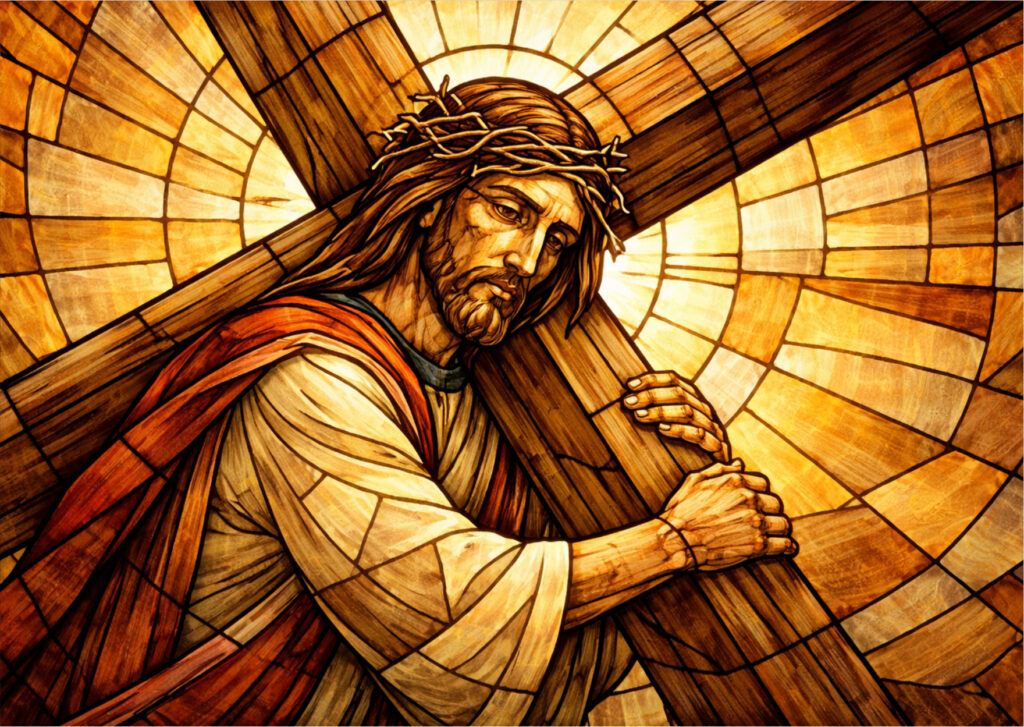

The crucifixion of Jesus has been studied from many perspectives. Some have spoken about it as a plan established beforehand to deal with the problem of sin. Others have described it as a way to satisfy the wrath of God, as if divine anger could only be appeased by the blood of God’s own Son. Between these views there are countless nuances, interpretations, and disagreements.
Today I would like to share one way of approaching the meaning of the divine sacrifice: perhaps the life Jesus lived became the very reason for his death.
Many aspects of the life of the Son of Man stirred the fury of the powerful. His words and actions disturbed those who held authority, until they did not only wish for his silence, but ultimately carried out his execution. All of it within the legal structures of his time.
I write these lines because we have become used to approaching the suffering and death of Jesus through mysticism alone. For example, we sometimes repeat expressions like “the blood of Christ has power” almost like a formula or a talisman, as if it could protect us from every danger.
But the events of Jesus’ final days were lived in his humanity.
Yes, God who became human.
The One who came to reveal the Father, the One whom no one had ever seen. And Jesus spoke about that Father using our language, sitting at our tables, and walking through our dusty streets.
And he did not speak ordinary words.
His message and his way of life challenged the system itself. The very world he warned us about, though we often failed to understand what he meant.
He challenged that system when he touched the lepers, those unwanted people whom no one wished to touch, those who were considered impure, who could not enter the temple, the city, the homes, or the lives of others.
This revolutionary Savior was a man of hope. That is why when he entered Jerusalem, he did so riding on a donkey.
His followers shouted “Hosanna,” a word that today we might understand as “Save us, Lord.”
And there were many reasons to cry out in that way. The oppression the Jewish people suffered under the Roman Empire was unbearable.
But Rome was not the only oppressor. The religious elite were deeply interested in collecting offerings and temple taxes, often from families who were already struggling to survive.
In some cases, when small landowners could not pay their debts to the empire, they were forced to surrender their land. They received some money in return, but it was never enough. Soon the money would run out. Then the former owners had to rent the very land that once belonged to them, paying to work the soil they once possessed.
And when that was not enough to cover their debts, many ended up selling their own lives into slavery.
This was the desperate reality of that time.
So when the crowd shouted “Hosanna to the Son of David” on that Palm Sunday, they shouted with hope. They hoped the enemy would finally receive what they deserved.
It was a fair expectation.
But the response of the new Savior was not what they expected.
A donkey became his symbol. A quiet act of wisdom, almost a gentle mockery of the oppressive system.
His message was not war.
It was love.
For them, that sounded illogical.
For us, it often still does.
Jesus could have encouraged an armed revolution against Rome. But instead he gave a clear and unsettling command:
Love your enemies.
Those who expected weapons, war, fire, and blood received forgiveness, reconciliation, compassion, and love.
And this changed everything.
Warmly,
Rev. David Gaitan