
Read here Part 1 | In the Sermon on the Mount, perhaps the most important teaching of the Galilean teacher, Jesus speaks about justice. In Matthew 5:38 he reminds the people of something they already knew well: “You have heard it said, ‘eye for eye and tooth for tooth.’” This was the logic of justice in the world he lived in. If someone harmed you, they had to pay for it. Violence answered violence. Punishment restored balance. It seemed reasonable, even fair.
But then Jesus begins to present a different vision of the kingdom of God. He says, “If anyone slaps you on the right cheek, turn to them the other also.” For many people this must have sounded shocking, even absurd. It was a revolutionary idea. The kingdom Jesus proclaimed did not follow the same logic that people expected. The common path says that criminals must receive exactly what they deserve. The narrow path that Jesus described speaks about forgiveness.
It is not difficult to imagine how such a message could create confusion and even anger. Some began to see the one they had called the “King of the Jews” as a disappointment. How could he ask them to forgive Rome? How could he speak of loving enemies when the people were suffering under oppression? A disappointed crowd can easily become a dangerous crowd, especially when religious leaders know how to manipulate emotions. The cry that once said “Hosanna” eventually became “Crucify him.” The very people who had welcomed him into Jerusalem now demanded his death.
The story then moves to the final hours of Jesus, beginning with the Last Supper. Passover was usually a great celebration among Jewish families. An animal was sacrificed, the table was full, and people gathered with joy to remember how God had delivered their ancestors from slavery. But when we look carefully at the meal Jesus shared with his disciples, something seems different. There is no lamb mentioned in the meal. There is only bread and wine. It is a simple table, almost the kind of meal that poor people share when there is not enough food for a feast. In that sense, Jesus’ last supper was a poor person’s meal.
Sometimes I think about those who are condemned to death in our time. Many prisons allow them to choose their final meal. People often select the best food they can imagine, something that reminds them of a happy moment in their past. But this condemned Nazarene chose something else entirely.
He chose to spend those final hours with the people he loved. The food did not matter as much as the company around the table.
From there, everything happens quickly. Jesus had already overturned the tables of the merchants in the temple. A woman had anointed him with costly perfume. He prayed in the garden of Gethsemane. And then came the most bitter kiss of all, the kiss of betrayal.
A good man was killed because his life and his words did not fit within the system of his time. The Chilean theologian Ulises Oyarzún once wrote that prophets often die young. The carpenter from Nazareth spoke truths that powerful people did not want to hear, and those truths eventually led him to a cross.
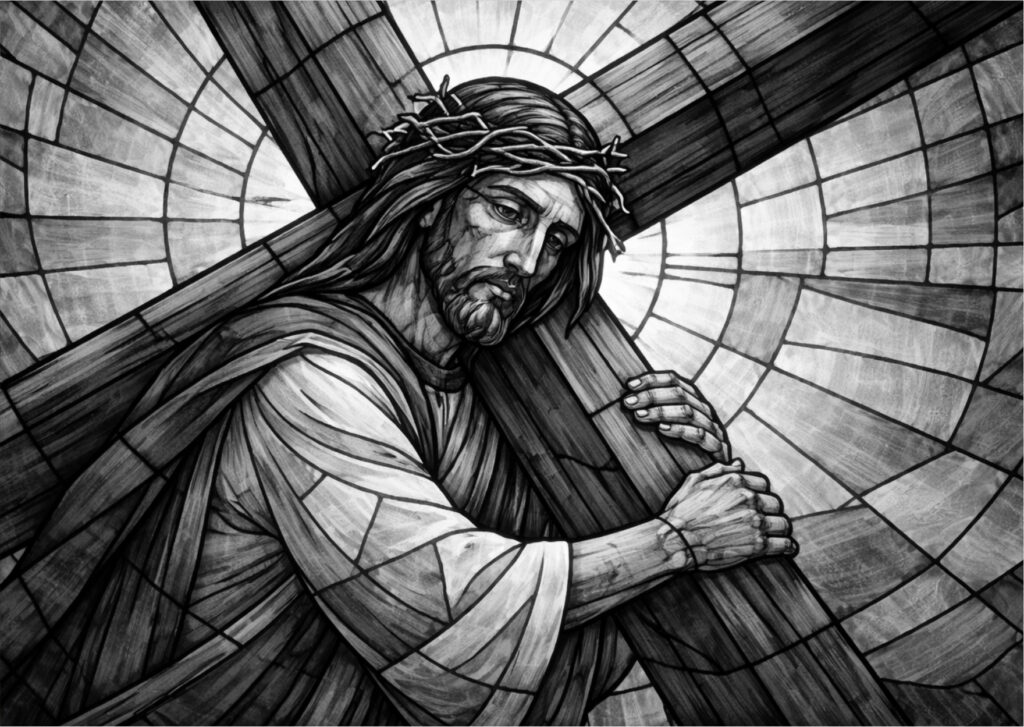
It was a cursed cross, a punishment reserved for the worst criminals and for those who dared to challenge the empire. Yet years later one of Jesus’ followers wrote something surprising about that moment. In Colossians 2:15 we read that God “disarmed the rulers and authorities and made a public spectacle of them, triumphing over them by the cross.”
At first glance this can sound mystical or symbolic. But if we look at the historical reality of that moment, we might ask an important question: how can someone triumph from a cross? How can someone who appears defeated expose the powers of the world?
Perhaps the answer lies in the very idea of justice that Jesus challenged earlier. The system believed in “eye for eye.” According to its own logic, punishment should match the crime. But when the authorities crucified Jesus, they exposed the injustice of that system. An innocent man was condemned and executed. At that moment, the powers of the world revealed their own corruption. The rulers, the religious leaders, the structures of power, and the so-called justice of the empire were publicly exposed.
According to their own standards, this innocent man should not have died. He should have been honored. He should have been king.
The King who entered Jerusalem on a donkey was teaching the greatest lesson of all. His final sermon was not simply spoken with words. It was lived with his life. And the reward he received from the Father was resurrection, because death could not hold him.
Yet even now we often struggle to understand that lesson. The same systems that Jesus confronted still shape our world. We continue to believe in eye for eye, and we often reject the difficult path of love and forgiveness. Sometimes religion itself becomes our best excuse to ignore the teachings of the Teacher.
Warmly,
Rev. David Gaitan