The Power of Forgiveness | One of the most difficult things for human beings is both to forgive and to ask for forgiveness. Countless pages have been written on the subject in books, editorials, academic works, letters, blogs, social media posts, and articles. Illustrations such as the now familiar saying, “Not forgiving is like drinking poison and expecting it to harm the other person,” have become widely popular, yet the practice of forgiveness remains elusive for many because they simply do not know how to forgive.
The Bible speaks extensively about forgiveness as well. Scripture not only encourages us to cultivate a forgiving spirit, but presents forgiveness as a command, for Jesus himself says, “For if you forgive other people when they sin against you, your heavenly Father will also forgive you. But if you do not forgive others their sins, your Father will not forgive your sins” (Matthew 6:14–15, NIV).
And yet, only the unforgivable needs forgiveness. I borrow this beautiful expression from the colombian theologian Alvin Góngora. Forgiveness is an invaluable gift offered to someone who does not deserve it, someone who has wounded us, betrayed us, or caused us deep pain. It is often the only path left to us if wisdom has not abandoned us.
Whenever someone hurts us, the consequences cannot simply be erased. Consider one example. If someone loses a loved one through murder, nothing in this world can remove the sleepless nights, the tears, or the profound grief that follows. It does not matter whether the murderer receives a life sentence or even loses his own life. None of that restores what was taken away. None of it erases the pain, the loneliness, or the countless memories marked by absence. At best, the wound may heal into a scar, but that scar will always accompany the one who has suffered.
That is why forgiveness is a gift. It is undeserved. Paradoxically, it blesses the one who gives it. Forgiveness liberates. It is the wise path. It is the excellent road through loss and suffering.
I do not intend these reflections to become an apology for avoiding justice, nor to suggest that forgiveness necessarily means the absence of accountability. Forgiveness does not always eliminate consequences or replace justice. Rather, what matters most is the posture of the heart and the journey toward healing.
A few years ago, I heard Rob Bell describe the wounds we carry in a memorable way. He said that every hurt, every betrayal, every disappointment, every painful memory is placed into a backpack that we carry on our backs. Year after year the backpack becomes heavier and heavier. But one day, if we stop by the side of the road and finally open it, we discover that inside there is bread and water. The very things that once weighed us down have become provisions for the journey of someone else. Our pain becomes comfort for another. Our scars become hope for those who now walk the road we once walked. Forgiveness is what transforms the unavoidable suffering of life into nourishment that strengthens those we love and those who need encouragement.
As always, Jesus gives us a remarkable example | Matthew tells us that Jesus deliberately traveled into the region of Tyre and Sidon (Matthew 15:21). Even more striking, Luke records:
“He went down with them and stood on a level place. A large crowd of his disciples was there and a great number of people from all over Judea, from Jerusalem, and from the coastal region around Tyre and Sidon, who had come to hear him and to be healed of their diseases. Those troubled by impure spirits were cured, and the people all tried to touch him, because power was coming from him and healing them all.” (Luke 6:17–19, NIV)
This detail can easily pass unnoticed unless we remember the long and painful history between Sidon and Israel.
According to Genesis 10:15, Sidon was descended from Canaan, whose lineage emerges from the story following Noah’s drunkenness in Genesis 9. Throughout Israel’s history, the Sidonians became associated with oppression and idolatry.
In Judges 10:12, the Lord himself reminds Israel that the Sidonians were among the peoples who oppressed them. One of Israel’s greatest enemies was Queen Jezebel, the wife of King Ahab. She was the daughter of the king of the Sidonians and became infamous for promoting idolatry and for murdering the prophets of the Lord (1 Kings 16:31).
The prophets repeatedly pronounced judgment against Tyre and Sidon because of their violence, pride, and hostility toward God’s people (Isaiah 23; Jeremiah 25 and 47; Ezekiel 27, 28, and 32).
Yet Jesus does not respond with resentment. He walks into the very land that had long symbolized hostility toward Israel and brings healing, mercy, and restoration. It is a profound picture of forgiveness, reconciliation, and love.
To many, Jesus’ teaching seemed unrealistic. Yet it was the wisest possible response to the reality facing God’s people. If we consider the situation of first-century Judea under Roman occupation, a military uprising would almost certainly have ended in catastrophe. Jesus understood this and he did not promote violence as the path to freedom because such a path would likely have led to unimaginable destruction rather than liberation. His way was different.
Jesus’ life is the living Word of God, he not only taught forgiveness; he embodied it, even to the point of giving his own life so that we might learn what divine love truly looks like.
Difficult as it may seem, forgiveness remains the wisest path and the only truly life-giving response. This becomes even clearer when we remember that we ourselves are, in many ways, machines that produce offenses. We constantly disappoint, wound, or fail those who love us. Sometimes we realize it; often we do not. Yet it remains true: if we refuse to forgive, we ourselves stand in need of the very mercy we deny to others.
Jesus illustrates this in the Parable of the Unmerciful Servant (Matthew 18:23–35). A servant is forgiven an unimaginably large debt by his king, only to refuse forgiveness to a fellow servant who owes him comparatively little. The parable ends with these sobering words:
“This is how my heavenly Father will treat each of you unless you forgive your brother or sister from your heart.” (Matthew 18:35, NIV)
Warmly,
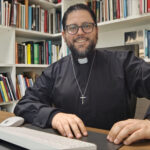
Rev. David Gaitan
Read here | Part II: What about offenses that are not unforgivable?